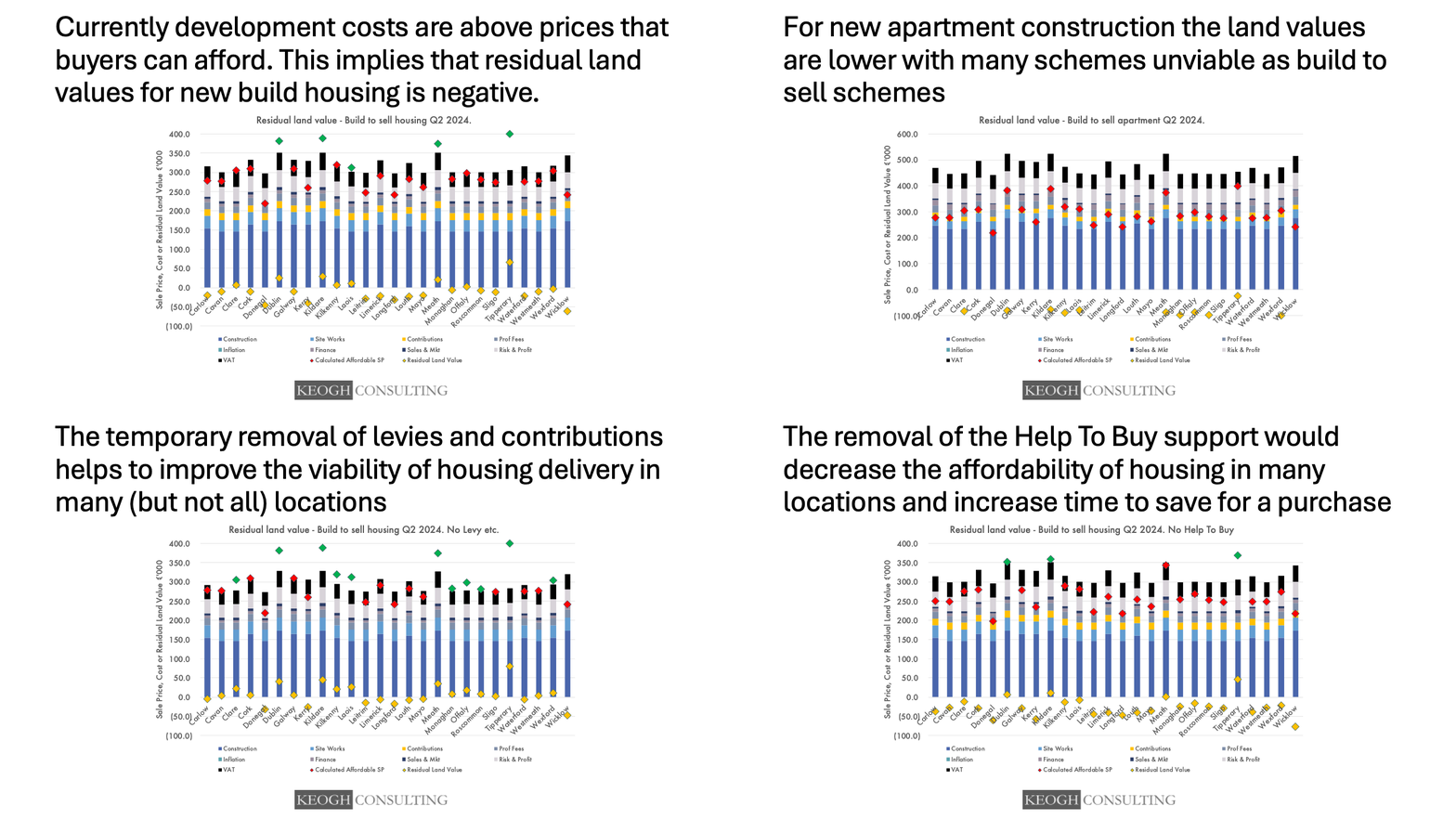
 With the head of property in the The Land Development Agency noting at the weekend that landowners are sitting on sites that can't be developed at #affordableprices it is instructive to look at the impact of current removal of levies and contributions on #viability. The removal helps viability although apartment delivery is still difficult. Additionally the Help to Buy scheme assists affordability and it's removal may increase the time required to save for buyers in many locations.
Supply side and demand side initiatives are helping to close the affordability gap and may ensure that commencements in early 2024 continue to grow past 2023 levels. However, it is hard to know whether the growth in Q1 commencements over the 2023 number was partially down to the reimposition of the levies at the end of April.
0 Comments
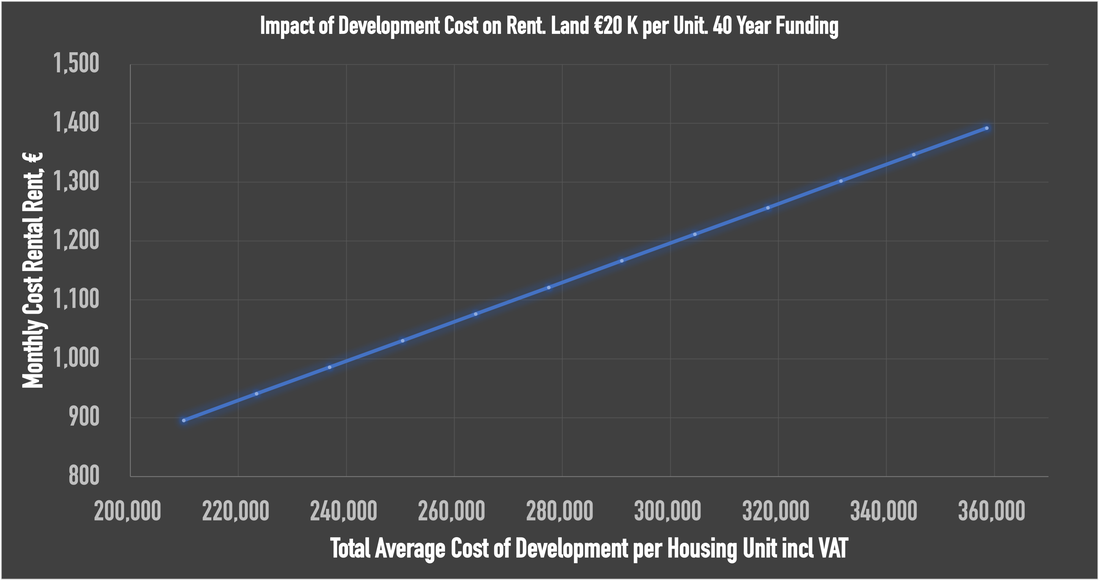 Development Cost v Rent Level With the LDA seeking applications for over 600 cost rental apartment in January there has again been much discussion on the level at which the rent is set. The target for the rents was set at least 25% below market rates in the area. It is called cost rental because the rent is used to cover the cost of constructing the accommodation over the life of a long-term building. It has proven to be a very effective way of providing housing in many European countries and is a part of the LDA’s housing delivery mechanism. Through the Project Tosaigh initiative the LDA are currently trying to unlock stalled developments and kickstart construction through partnering with developers and make homes available as either cost rental or for purchase through a shared equity scheme. While there has been recent discussion about cost rental these is less visibility on how rents are set, however, in a January Oireachtas housing committee meeting[1] there was some interaction among the witnesses and committee members on how the rent level was set and why the rent was at the level it was. The high level and unaffordability of the proposed cost rental rents (>30% household disposable income) was highlighted by some of the attendees. [1]https://www.oireachtas.ie/en/debates/debate/joint_committee_on_housing_local_government_and_heritage/2024-01-23/3/accessed on 1/2/2024  Subsidy Required v Rent Level There are difficulties in achieving rents below €1,000 per month given the costs associated with residential projects and the level of subsidy required to drive down the rent level under this delivery mechanism. Using the LDA Barnwell Point development in Hansfield Dublin 15 as an example this article and the attached financial model looks to illustrate how the rent is calculated based on assumptions made from publicly available sources. The subsidy or grant required to bring the monthly rent below €1,000 is also calculated. LDA Cost Hansfield Cost Rental Scheme Having obtained planning in 2018 and being completed in late 2023 the Barnwell Point development (part of the wider Hansfield SDZ) by McGarrell Reilly involves 247 apartments over 6 blocks on a 1.5 Ha site with 272 carpark spaces. The works include the construction of 70 No. Studio & 1 bed apartments; 164 No. 2 bed apartments; 12 No. 2 bed duplex units; and 1 No. 3 apartments. With my estimate of total construction costs for the 21,447 sq m GIFA scheme at €66.8M the total development cost is €85.2M inclusive of VAT and land. A net household income of up to €66,000 makes you eligible for the scheme. The rent is linked to the cost of the build, and will remain stable despite any market increase. Tenants will pay €1,400 per month to live in the 2-bedroom Cost Rental homes delivered as part of this project[1]. The rent of €1,400 per month, based on the cost of delivering and maintaining the homes, is a significant reduction when compared to market rents for 2-bedroom apartments in this location (<25%) The projects have been delivered through the LDA’s Project Tosaigh initiative. The completed development will be manged by a named management agent (not the LDA). 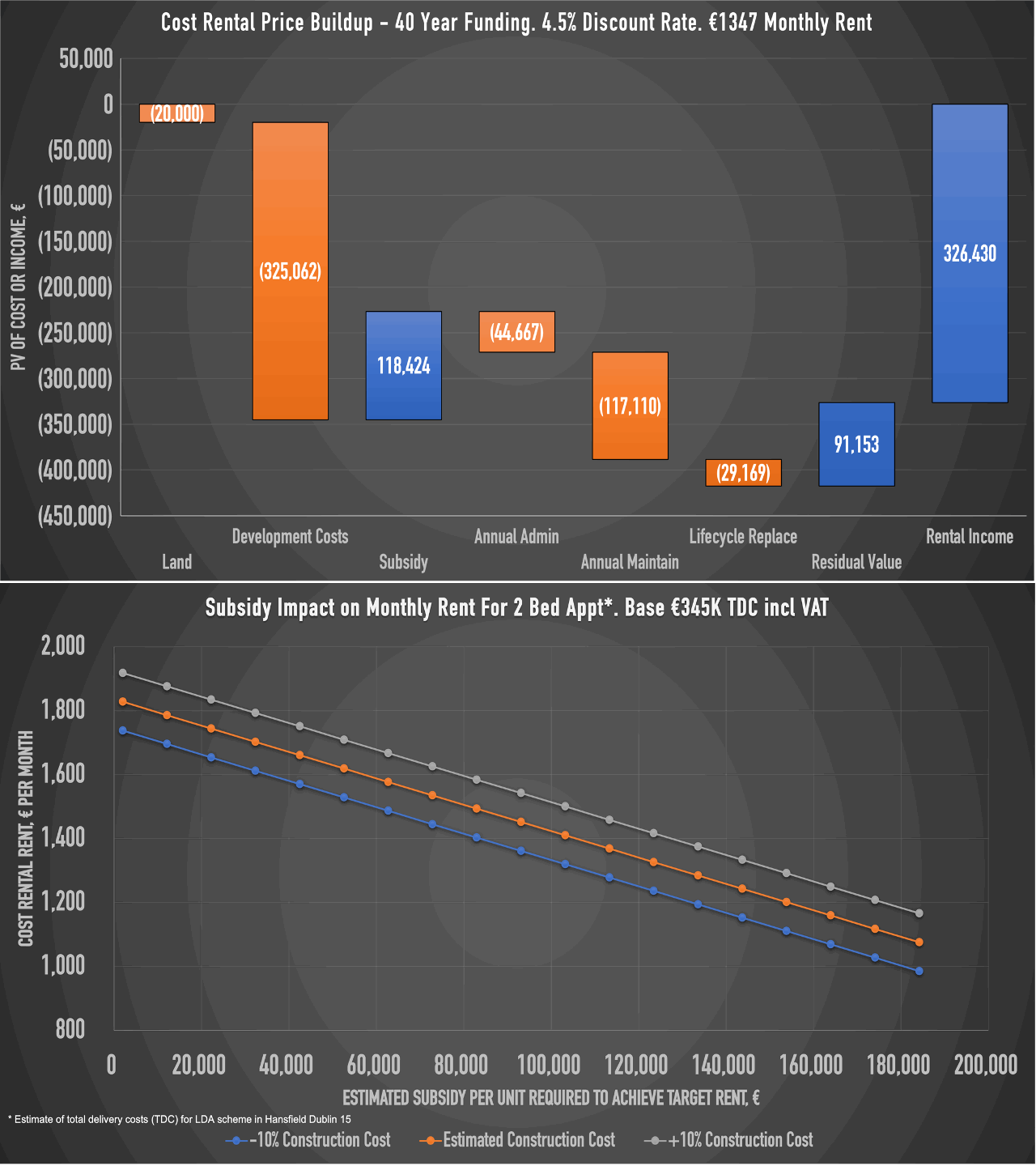 LDA Development Overview LDA Development Overview Cost Drivers The following are the costs that have to be covered when setting the cost rental rent level:
Residual Value at End of Analysis Period The apartments are owned at the end of the assumed 40 year period and thus they have a residual value beyond the analysis period - this can be based on the market value at that time (using an appropriate terminal cap rate) or the rebuilding cost at that time (using an appropriate average construction inflation estimate). Discount Rate The projects discount rate is the rate of return used to discount future cashflows back to their present value (PV). This rate is often an organisation’s weighted average cost of capital, required rate of return, or the hurdle rate expected relative to the risk of an investment. In Ireland the NDFA publishes recommended project specific discount rates. An approximation can be made by using a long term building loan. The model (bit.ly/KeoghCostRental) calculates the present value of each individual cash flow (rental income or expense) as a growing annuity – a series of future periodic payments that grow at a proportionate rate. Final year values and costs are calculated by inflating incomes and costs using the assumed growth rates – these values and costs are then discounted to the present value using the discount rate. [1] The average rent across the development is calculated to be €1,347 p.c.m. with a total estimated gross income of €123,456 p.a. 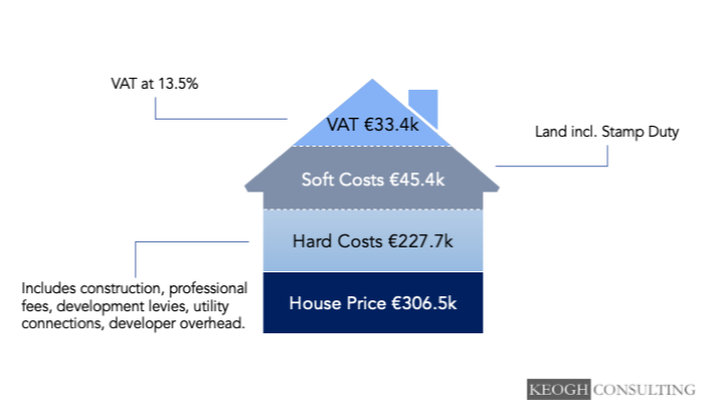 Required Cost Buildup For 300k House I've previously written about what would have been required to deliver a house for €250k - seems an age ago when we didn't know about this thing called Covid (https://bit.ly/250kHouse). Housing delivery at €300k is now spoken about as a target (115sq m semi detached house). In summary - it is quite hard to do so - especially with this target assuming no profit/contingency. 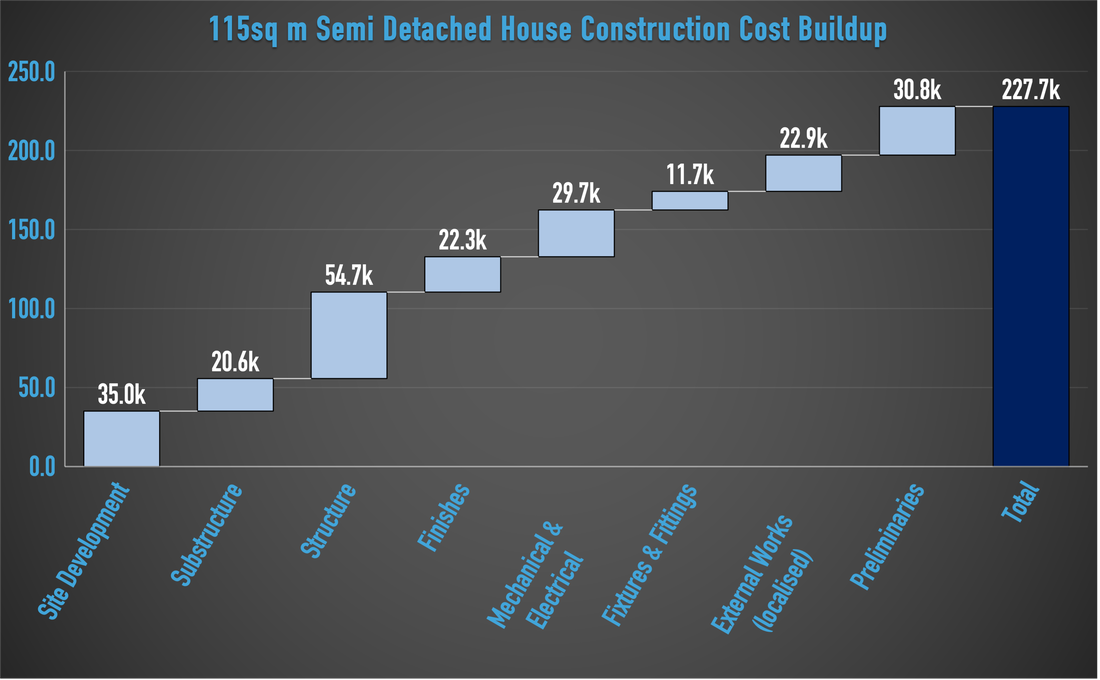 Construction Cost Buildup 115 sq m House Off site construction may be part of the solution to lowering costs, however, the real advantages of OSM may not kick in until high volume is achieved given the large fixed cost base of off site construction companies - requiring high utilisation to achieve low costs. It’s a bit of a chicken and egg situation given the large investment in OSM factories required in advance of demand appearing in a market. The LDA are being tasked with delivering homes of state owned lands. Given the governance requirements around being careful with the public purse it is apparent now that this approach is a slow and risk minimising approach. The LDA recent report on relevant public land identified sites for 67,000 affordable homes on 83 state owned sites. The published average estimated development costs are generally above €300k - it is not an easily reached target even for the public sector with a not for profit mandate. 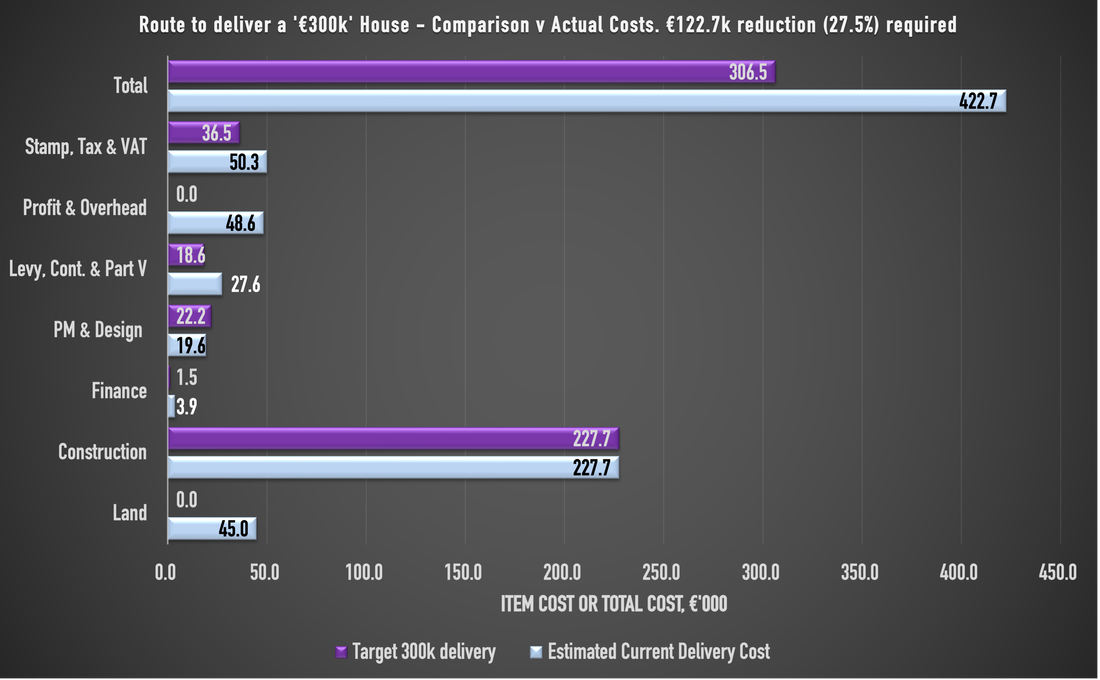 Actual Costs v Hypothetical Cost to deliver 115 sq m semi detached house However, given the government take from incremental house building being high there may be positive cost benefit ratios - not though without significant distortion to the market that may have state aid and competition impacts. 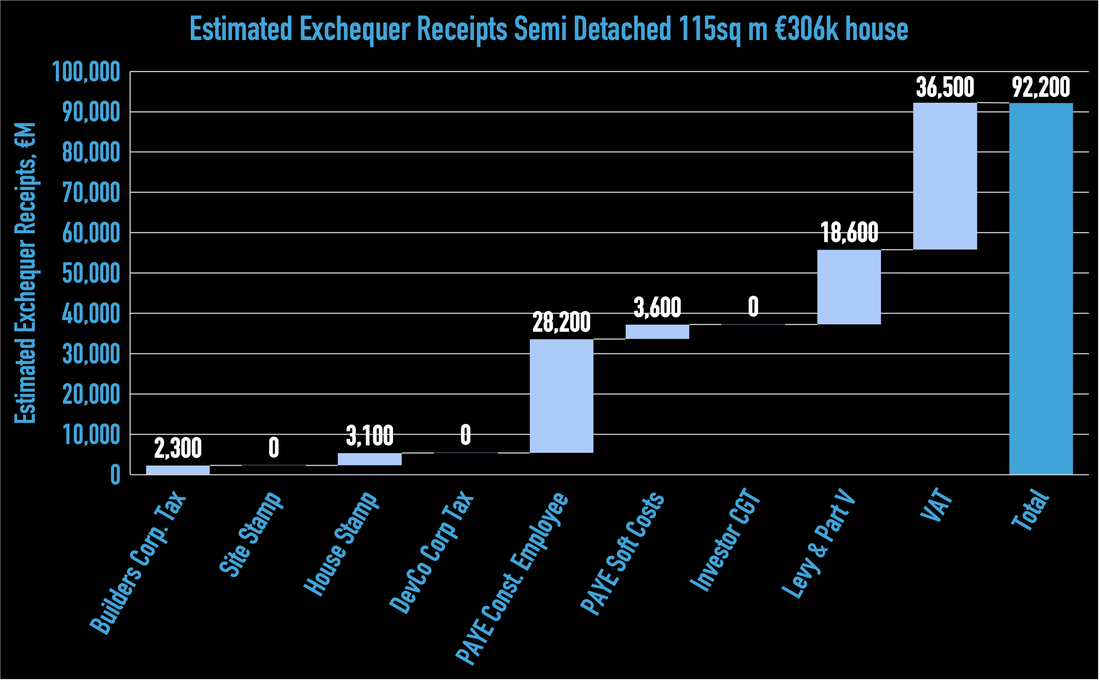 Estimated Exchequer Receipts On Construction of €306k House One thing that is given minimal consideration is the fact that these analyses typically consider development on a standalone site - not the reality of development of multiple small, medium and large sites in parallel with differing risk profiles.
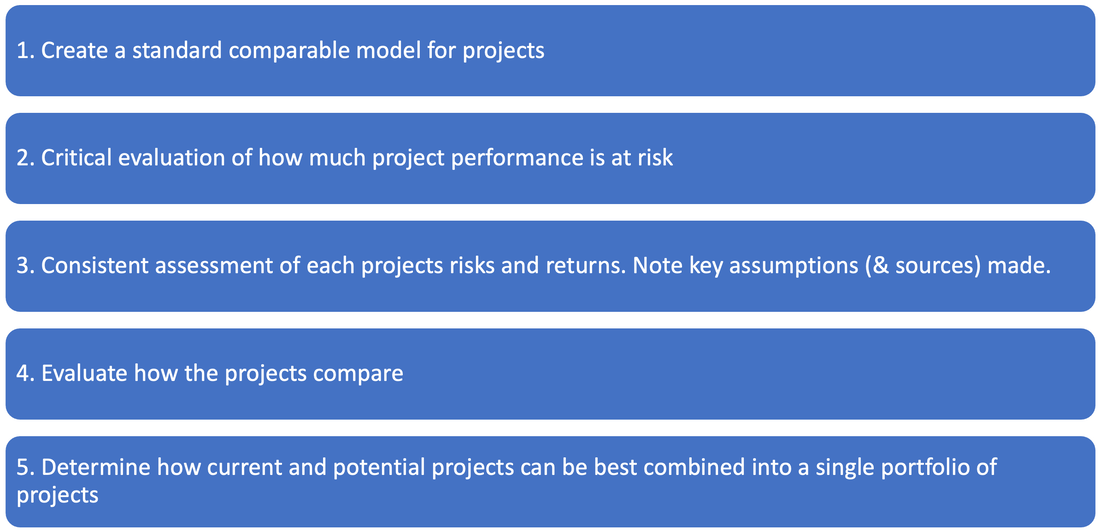 Figure 1 - Approach to review a portfolio of projects In Ireland, the past months have been characterised by much uncertainty and a number of stops and starts in the construction industry. In particular since January 2022, there has been significant construction cost inflation resulting in increases and uncertainty in forecast development costs for projects due to these escalating costs. Decision makers need to have a range of tools available to decide which projects to prioritise, particularly when delays occur and assumptions change as they have done in the past 12 months. Q4 is always a good time to review projects and reset priorates for the next year. With significant changes in project assumptions on account of global market political and economic uncertainty, not least changes in timing, costs and revenues, there may be possible knock-on impact on other projects. You need to be able to consider how to prioritise projects in a portfolio. This paper (download here) illustrates an approach to prioritisation of a portfolio of projects with a case study on a residential development. 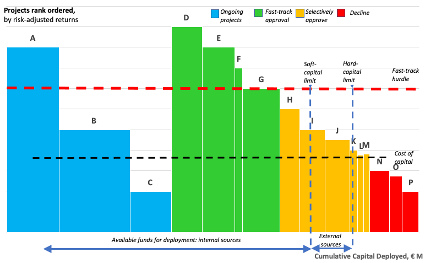 Figure 2 - Prioritising a portfolio of projects Projects are an iterative process of planning, doing and reviewing. From time to time despite the best intentions real estate projects get into trouble and you have to step in to review what is going wrong and put a new plan in place to deliver (do) the project. The following outlines a 2-step process to strategically review a real estate project and then once the review is complete to create a turnaround plan to deliver the project. The approach can of course be used as a checklist at the beginning of a project to make sure that all resources are in place to deliver a project and that a robust plan is in place to deliver certainty. 
|
About Us
Keogh Consulting looks to help individuals and organisations deliver the right projects the right way. Here is some of our knowledge and a few case studies that we hope will help you on your project journey. 
Categories
All
Project Cost Calculator & Database
Cost Rental Simple Model
Cost Rental Complex Model
|
||
 RSS Feed
Service |
Company
|
|
