High performance team formation using a team canvas workshop delivered with Miro via MS Teams25/1/2022 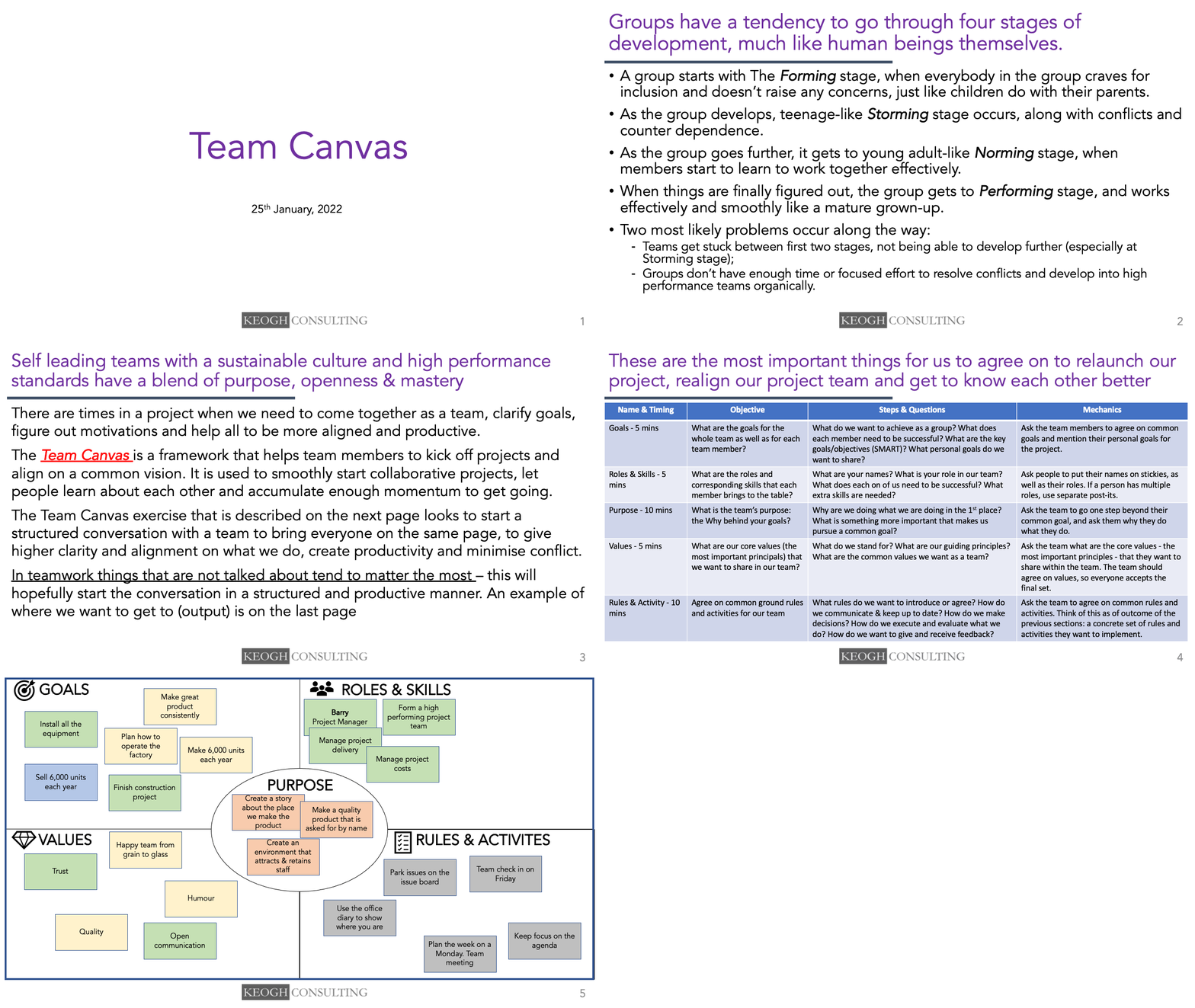 Recently on a turnaround project we had to develop a way to bring a remotely based existing team together to complete a project in the middle of Lockdown 3.0. With Covid having delayed the project significantly the team needed to relaunch and start to put in place high performing behaviours to complete the project.
Using the team canvas an online workshop was developed and using MS Teams and Miro the workshop was delivered online using the approach (keo_consult_team_canvas_workshop.pdf) outlined above. Project now underway again and the team looking forward to getting boots and hard hats on again onsite.
0 Comments
Projects are an iterative process of planning, doing and reviewing. From time to time despite the best intentions projects get into trouble and you have to step in to review what is going wrong and put a new plan in place to deliver a project. With the stop start impact of the Covid pandemic on a range of capital projects it may be necessary to but a new plan in place for a delayed project,
The following outlines a 2-step process to strategically review a project and then once the review is complete to create a turnaround plan to deliver the project. The approach can of course be used as a checklist at the beginning of a project to make sure that all resources are in place to deliver a project and that a robust plan is in place to deliver certainty. projectworkoutv2021.pdf Recent Residential Tenancies Board (RTB) and Central Statistics Office (CSO) statistics regarding rental increases and housing price increase have again highlighted the affordability difficulties faced by renters and households looking to get a new home. It's a multifaceted problem that needs a combined collaborative approach between public and private sectors to increase housing supplying make homes available. 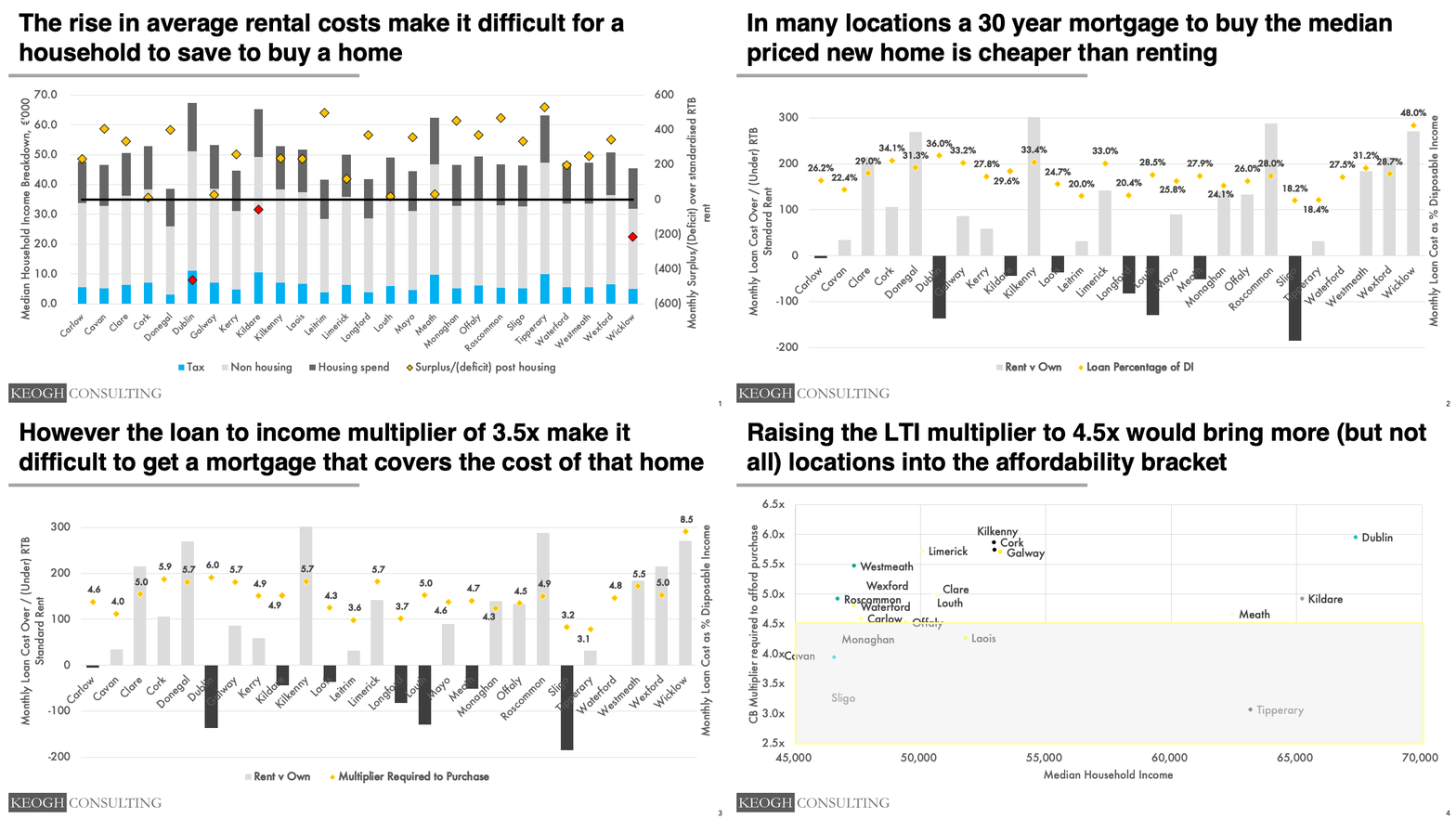 With residential development closed down since January (in addition to the 2020 lockdown) the financial hit is significant. To put in perspective - the delay to Oakmount Groups development of 48 apartments in Dublin may add up to €0.5M to their project costs. This is approximately equivalent to the revenue from one unit and adds over 2% to project costs. 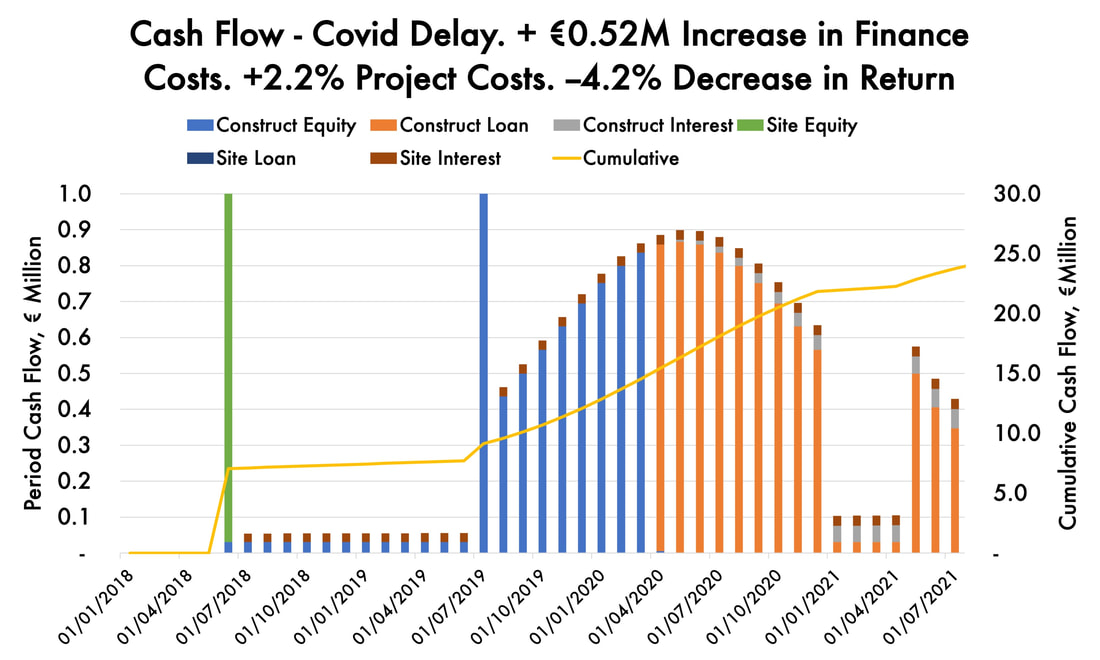 Impact on 48 unit apartment development The picture is the same for commercial development with projects stalled and no return to site date in place. With such uncertainty around delivery date this impacts on a developers ability to get a tenant in place. Further delays will make a bad situation worse. The example below illustrates the impact on Valorem Investment Partners project on Newmarket Square, Dublin 8. 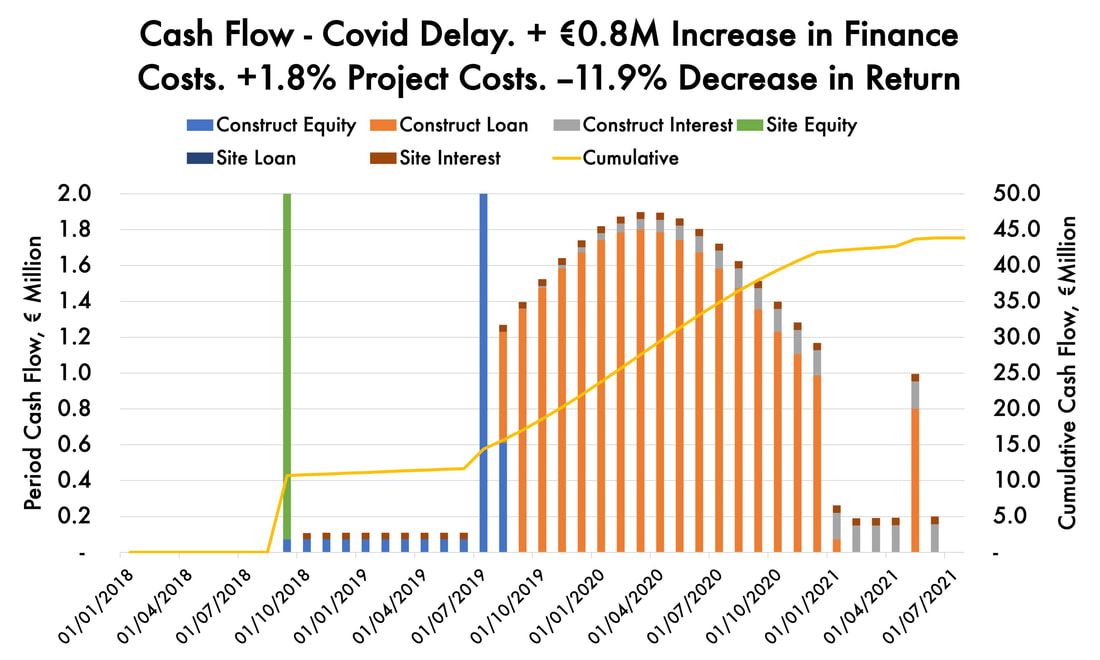 Impact on 9,400 sq m commercial development Dublin 8 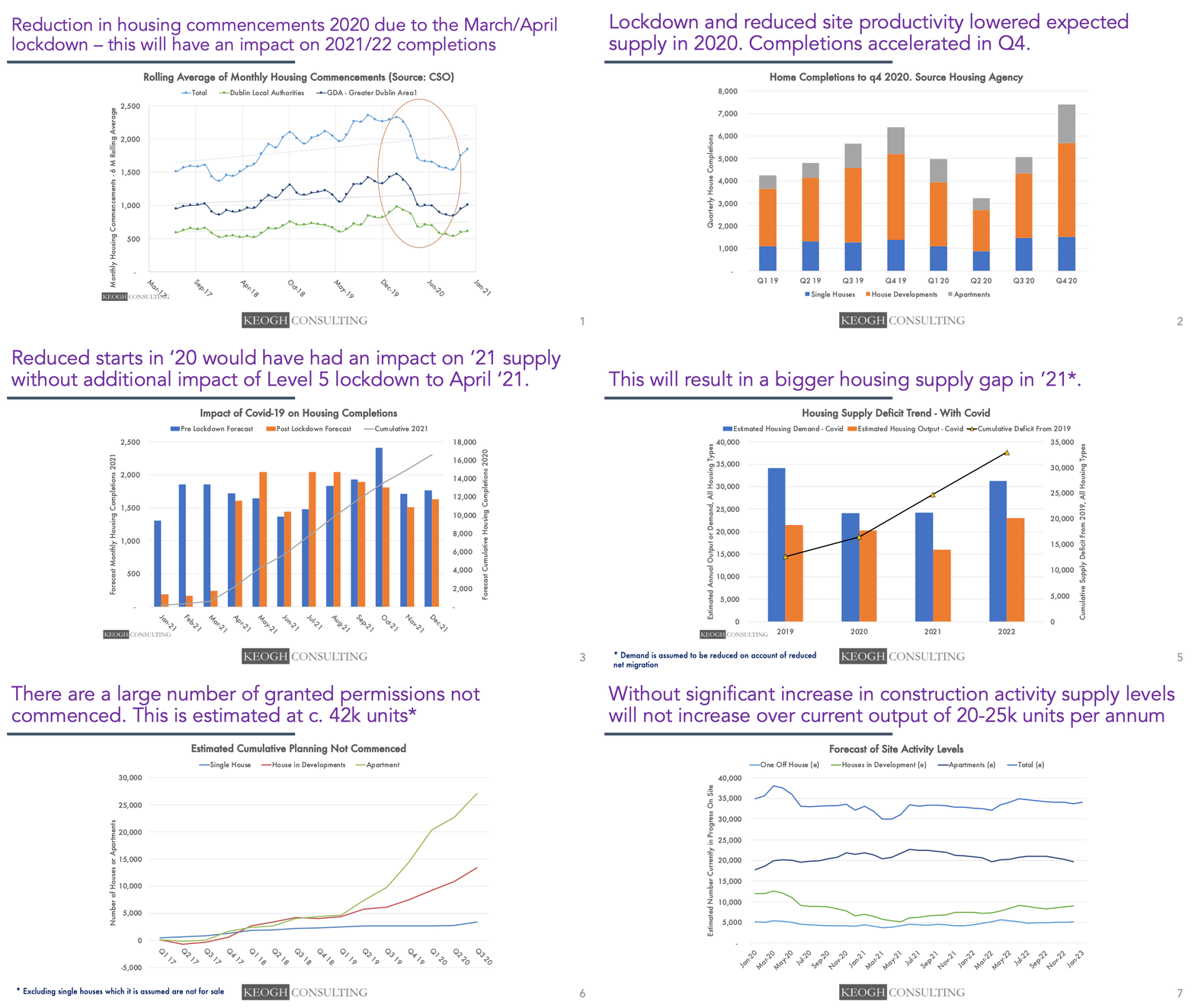 The 2021 lockdown is having a significant impact on residential construction. Our detailed report looks at some of the issues - download here.
|
About Us
Keogh Consulting looks to help individuals and organisations deliver the right projects the right way. Here is some of our knowledge and a few case studies that we hope will help you on your project journey. 
Categories
All
Project Cost Calculator & Database
Cost Rental Simple Model
Cost Rental Complex Model
|
 RSS Feed
Service |
Company
|
|
